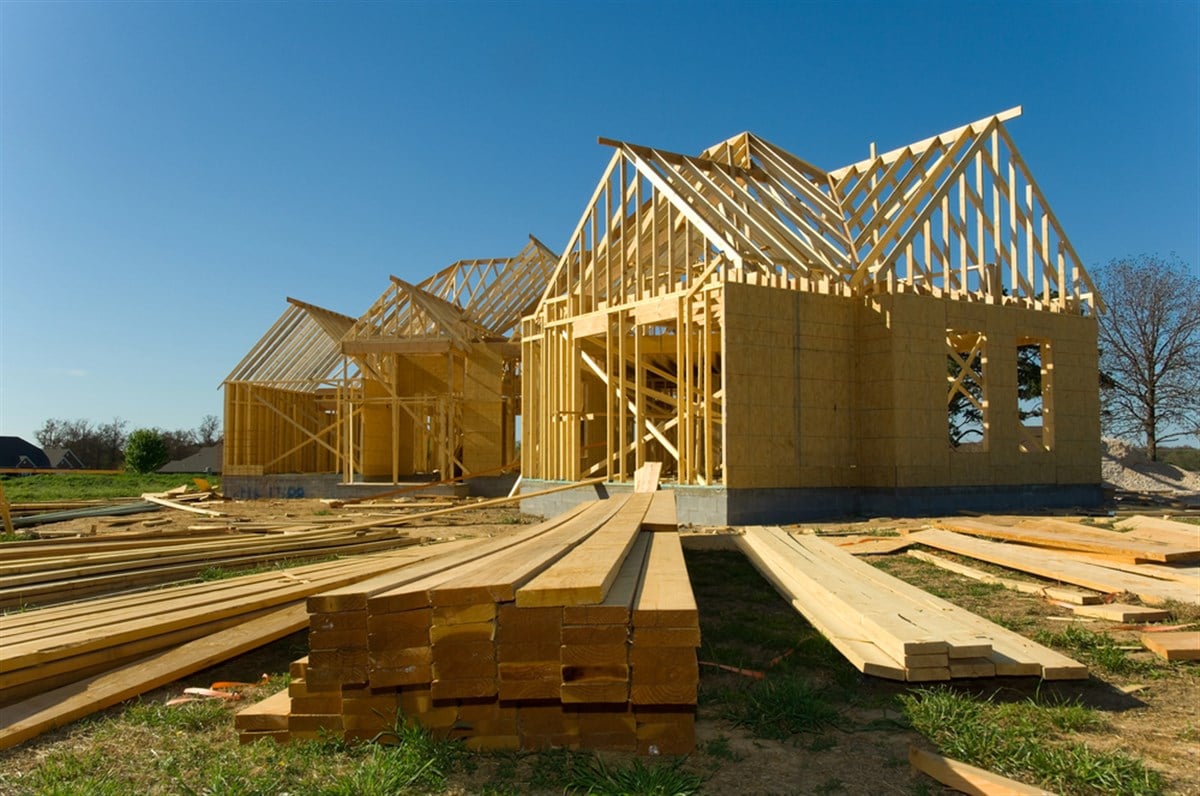
Wall Street analysts recently issued a wave of downgrades on several homebuilding stocks, raising fresh concerns about the outlook for the real estate sector. But does their bearish stance hold up under closer inspection? To find out, investors need to dig into the fundamentals and key performance indicators (KPIs) driving these businesses. Here's what the data says—and what it could mean going forward.
Affected by these downgrades, names like Lennar Corp. (NYSE: LEN) and PulteGroup Inc. (NYSE: PHM) have recently fallen to an average of 74% of their 52-week high levels, officially entering bear market territory and marking a significant decline beyond a mere correction in this case.
This decision to lower price targets and ratings is more than just a reaction to the price; it is a view that comes straight from what these businesses are reporting.
This is also where the macroeconomic data comes into play, as building permits in the United States have fallen below a long-term average, sending the industry into a near-depressive state.
However, this space may seem risky today; there is also a barbell position on the other end of the spectrum in real estate investment trusts (REITs), which are now trading at a discount due to the slowdown in the homebuilding space, creating a chance for investors to hedge their capital.
What’s Driving Prices Lower for Homebuilders?
Overall, while home prices (on average) have risen to $512,000 to incentivize homebuyer demand for an appreciating asset, building permits have consistently fallen every month for several quarters now. The lower demand for new homes is the net result of this dynamic, which directly hurts margins for homebuilders.
With thinning margins and earnings per share (EPS), it makes sense to view these downgrades as part of an overall industry slowdown. However, no company-specific issues can be cited in case investors wonder whether any of these names is in real trouble.
Lennar’s Numbers Show Promise (If It Can Deliver)
In the latest quarterly earnings report, Lennar’s financials show that homebuilding operations suffered a 48.5% decline in earnings, mainly driven by slowdowns in activity (as seen in building permits) and rising construction costs, which could become the new norm as President Trump rolls out new tariffs.
All told, the company reported EPS of $2.29 for the quarter, and even though this was above the MarketBeat consensus of $2.14, it represented a 46% decline compared to last year’s $4.26 in EPS, roughly matching the fall in homebuilding earnings.
One positive aspect for Lennar is the level of backlogs and new orders, which are coming in at 16,953 homes to be built and 23,004 new dwellings ordered, respectively. However, as these projects have not yet been started, they are still subject to cancellation should the macroeconomic backdrop in housing continue to deteriorate, which might be one of the risks these analysts foresee.
For instance, Zacks Research is now rating Lennar as a Strong Sell. At the same time, Raje Jadrosich from Bank of America has lowered his price target from $133 per share to $125, further amplifying this sentiment in the space.
PulteGroup Shows It’s an Industry Effect
PulteGroup's quarterly results also show another decline in operating cash flows, going from $657.2 million last year to $421.7 million this year (a 36% decline), all from the same headwinds that affect Lennar. Although the backlog of 10,779 homes is a reason for optimism, the same dynamic applies to these projects, which are still subject to cancellation.
Therefore, it would be irresponsible for analysts to focus on this future potential while ignoring the warnings from cash flows and the slowing construction environment. This is why Zacks Research also assigned Pulte a Strong Sell rating, and Rafe Jadrosich lowered his target price from $145 per share to $140.
It seems the downside isn’t priced in just yet. Over the past month, PulteGroup’s short interest rose by 7.1%, demonstrating the bears' conviction in the housing and construction market.
A Worthy Mention for Diversification
Despite all the negativity, some investors may see these dips as buying opportunities, betting that these backlogs will be realized and help support EPS moving forward. However, if these assumptions prove incorrect, they can still diversify their portfolio and profit from the real estate cycle.
This is where REITs come into play, and this list of three property portfolios exhibits several signs of potential undervaluation. As dividend yields serve as a proxy for cap rates (the primary valuation metric for real estate), current payouts suggest that the homes in these portfolios may be approaching a bottom.
Unlike homebuilders, these REITs aren’t directly exposed to the impact of building permits or construction activity, as investors are primarily interested in the properties they hold and the income they generate from them. In this case, these serve as the perfect protection for the bearish price action seen in builders.