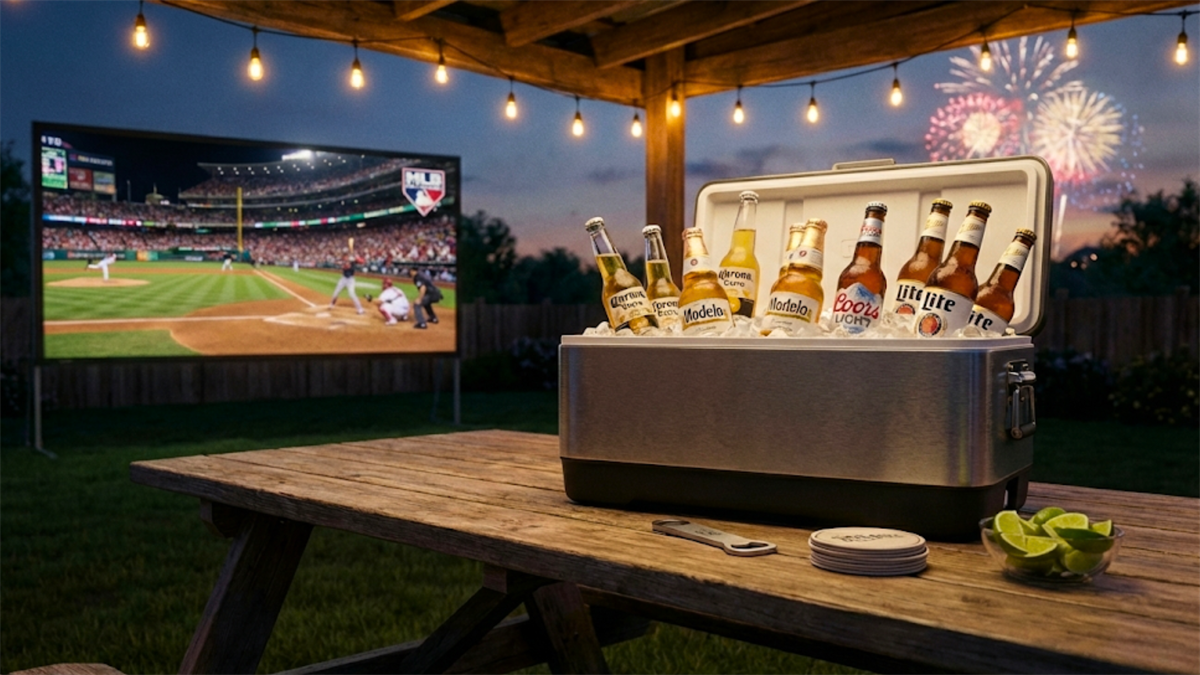
After several years of slipping consumption trends and competition from ready-to-drink (RTD) cocktails and hard seltzers, 2026 could be the year when beer comes back into favor. Goldman Sachs analysts believe 2026 offers a rare blend of tailwinds for brewers: the FIFA World Cup, the Summer Olympics, and the 250th anniversary of the United States.
Major events like these create more reasons for people to gather, which increases the likelihood of beer consumption. Historically, major sporting and cultural events have boosted beer sales, giving some of the top stocks a temporary but meaningful lift in volume.
For investors, it presents an opportunity to participate in a potential cyclical upswing in demand for alcoholic beverages. Two stocks stand out as well-positioned to benefit: Constellation Brands (NYSE: STZ), the powerhouse behind Modelo and Corona, and Molson Coors (NYSE: TAP), a legacy brewer with renewed momentum and diversification beyond traditional beer. Both offer distinct ways to capitalize on what could be a reason why these brewers lead consumer staples stocks out of their doldrums.
Why Beer Sales May Still Go Flat
By now, investors are probably growing weary of hearing about the bifurcated economy. But it’s impossible to make a forecast for 2026 without acknowledging that there’s more that we don’t know about the economy than what we know.
Inflation is trending lower, but it remains comfortably above the Federal Reserve’s preferred target rate of 2%. Several analysts believe a new round of inflation is a near certainty if the Fed continues to lower interest rates and reverts to its policy of quantitative easing (QE).
The job market is also a concern. When consumers are concerned about their jobs, discretionary purchases, such as beer, are often the first line items to get cut.
Brewers also need to find a way to reach the Gen-Z consumer who is buying less alcohol for both affordability and health reasons. The industry is also competing with cannabis, which has become legal in many states and has become the vice of choice for this generation.
Constellation Brands: Premium Beer Leadership With Margin Strength
Premium beers have done slightly better in the last few years. That’s a good reason to consider Constellation Brands, which is a leader in the ongoing premiumization trend within the beer category. In fact, over 94% of the company’s sales come from beer.
The company has steadily gained U.S. market share through its Modelo Especial and Corona Extra imports, which dominate shelves and draft lines nationwide. Constellation’s pricing power and operational efficiency have enabled it to maintain strong margins despite fluctuating input costs over the past two years.
Looking ahead to 2026, the brand portfolio appears particularly well-aligned with the celebratory tone anticipated around global events. Increased on-premise consumption, cross-promotions during the World Cup and Olympics, and marketing synergy with U.S. celebrations could all drive higher volume growth.
Constellation Brands is a contrarian bet on growth, but it’s one that comes with an increasingly low risk. Analysts are forecasting approximately 30% upside for STZ stock. One reason for that could be the company’s growing free cash flow, which is happening despite lower sales year-over-year. That means the company’s dividend, which yields 2.93%, as of this writing, is safe.
Molson Coors: A Volume Play on Major Events and Core Brands
Molson Coors has spent the past several years reinventing itself after long stagnation. The company has pivoted toward modernization. This means focusing on brand refreshes, better marketing, and expansion into “beyond beer” categories like hard seltzers, spirits, and non-alcoholic beverages.
However, that hasn’t been reflected in the TAP stock price, which is down nearly 20% in 2025. However, 2026 may be the year when the company may benefit by focusing on its roots.
The company’s core portfolio, anchored by Coors Light and Miller Lite, stands to benefit most from a volume rebound tied to next year’s surge of global and national events. TAP also has a strong logistics footprint and deep relationships with retailers, positioning it to capture incremental on-premise sales as major sports and anniversary celebrations unfold.
Molson Coors is another company with a strong free cash flow story. Recent cost discipline and debt reduction efforts have improved margins and enhanced financial flexibility, setting the stage for potential shareholder returns through dividend growth or buybacks.