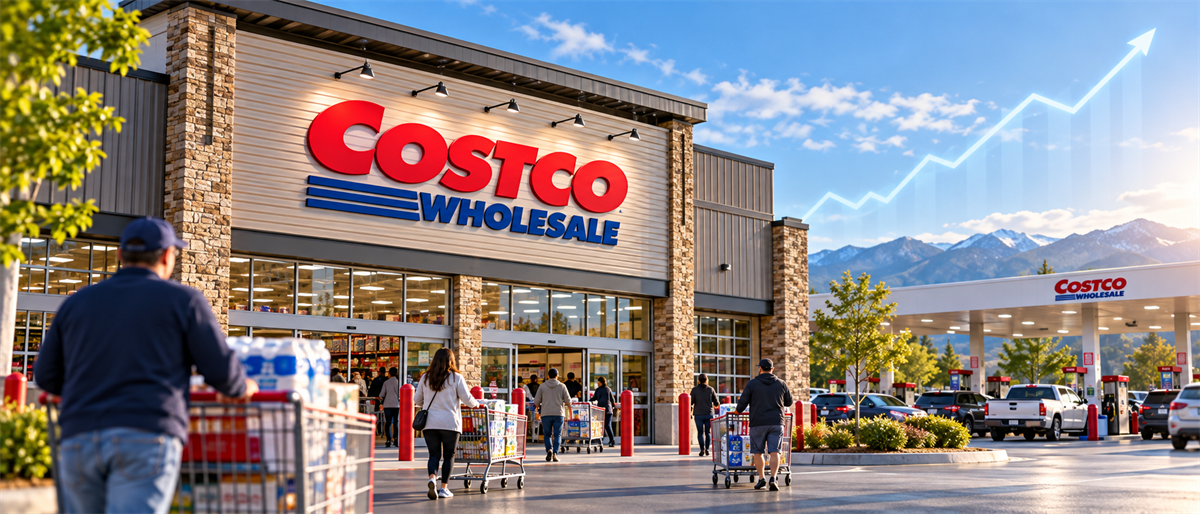
When Costco (NASDAQ: COST) reported Q4 2026 earnings on Thursday, Sept. 24, its results demonstrated that consumer demand remains strong despite notable headwinds.
The membership-based warehouse club posted earnings per share (EPS) of $6.75, topping the consensus estimate of $6.54, while revenue of $95.72 billion topped analyst expectations for $94.97 billion.
While shares remained flat in after-hours trading following the report, they climbed up about 2.5% by late Friday morning.
The upshot for investors is that the company continues to successfully navigate a convoluted tariff landscape and subsequent cost pressures while still providing consumers with the savings that justify their memberships.
Pharmacy, Gas, and Membership Growth Help Drive Costco’s Q4 Beat
The EPS beat was the fifth in six quarters, while the revenue beat was Costco’s seventh in a row.
In his earnings call comments, CEO Ron Vachris highlighted how the company’s success was driven by nearly 20% growth in its pharmacy business, specifically through that segment’s digital capabilities, as well as its fertility and obesity drug offerings.
“ We increased member value and convenience through our GLP-1 and fertility programs, as well as digital options like Rx mobile pay ahead and pickup lockers,” Vachris said. “Many [Costco] U.S. buildings are now achieving Rx pay-ahead penetrations of more than one-third of prescriptions, saving both members and our employees valuable time.”
Vachris added that those programs contributed to double-digit prescription growth for fiscal 2026, more than offsetting the headwinds from lower prices as a result of Medicare maximum fair price changes.
Another driver of the strong quarterly results was the company’s fuel segment. Vachris noted that Costco’s “gas business has had a record year, driven by members seeking value…in the face of rising prices.”
For the year, the company estimates it saved members over $3.2 billion versus the average price at the pump in markets where it operates.
Membership growth was also strong. Paid members increased 3.8% to 84.1 million, while executive members grew 9.4% to 42.3 million. Importantly, renewal rates in the United States and Canada improved to 92.3%, with management eyeing engagement among younger members and growth in gas, digital channels, and executive memberships as potential drivers of higher future spending.
Together, those factors helped fuel a strong Q4 performance. Costco’s net sales increased 11.2% to $93.87 billion, while comparable sales increased 9.4% (6.7% excluding gas and foreign exchange).
Adjusted for the 15-cent per share tariff-refund benefit, diluted EPS still managed to grow by more than 12% year over year.
Costco Plans 33 Warehouse Openings to Support FY2027 Growth
In Q4, Costco added 12 warehouses, including a relocation in Taiwan, 10 new U.S. locations, and the company’s 43rd warehouse in Mexico. For the fiscal year, 28 new warehouse locations were added, including three relocations for a total of 25 net new buildings.
In total, Costco now boasts 939 locations worldwide. The company plans to open another 33 warehouses in FY2027, including five relocations, for a total of 28 net new locations—just shy of its longer-term goal of 30 net new warehouses per year. Four of the planned openings will be in Europe.
That expansion plan has helped fuel sales growth, both in stores and beyond its walls. Its partnerships with Uber (NYSE: UBER) Eats and DoorDash (NASDAQ: DASH) now provide nationwide delivery coverage, which management said is largely incremental to warehouse sales.
Tariffs remain a challenge, driving cost pressures that have contributed to earnings uncertainty. In Q4, Costco received a $184 million related to tariff refunds, but expects to reinvest most future refunds into lower member prices, making the benefit of those refunds non-recurring.
The company specifically underscored how higher memory costs in consumer electronics and inflation in gas and petroleum-related products pressured gross margins, while future tariffs, freight, and commodity costs remain areas of uncertainty.
Analysts Stay Positive, But Costco’s Valuation Remains Elevated
Between top-line sales growth of more than 10% and an EPS forecasted to grow 10.19% next year based on a forward price-to-earnings multiple of 43.9, Costco remains in Wall Street’s favor.
Overall, it receives a consensus Moderate Buy rating, with 23 of the 34 analysts currently covering the stock assigning it a Buy. The $1,047 price target reflects around 14% potential upside.
Costco scores higher than 86% of companies evaluated by MarketBeat and ranks 25th out of 171 stocks in the consumer staples sector. Institutional buying has accelerated. Inflows of more than $62 billion over the past 12 months have easily surpassed outflows of less than $20 billion. Meanwhile, current short interest remains negligible at 1.66% of the float.