Stock of the Day

November 17, 2026

Apple (AAPL)

$350.52
-$2.26 (-0.6%)
Market Cap: $5.09T

About Apple

Apple Inc. designs, manufactures, and markets smartphones, personal computers, tablets, wearables, and accessories worldwide. The company offers iPhone, a line of smartphones; Mac, a line of personal computers; iPad, a line of multi-purpose tablets; and wearables, home, and accessories comprising AirPods, Apple TV, Apple Watch, Beats products, and HomePod. It also provides AppleCare support and cloud services; and operates various platforms, including the App Store that allow customers to discover and download applications and digital content, such as books, music, video, games, and podcasts. In addition, the company offers various services, such as Apple Arcade, a game subscription service; Apple Fitness+, a personalized fitness service; Apple Music, which offers users a curated listening experience with on-demand radio stations; Apple News+, a subscription news and magazine service; Apple TV+, which offers exclusive original content; Apple Card, a co-branded credit card; and Apple Pay, a cashless payment service, as well as licenses its intellectual property. The company serves consumers, and small and mid-sized businesses; and the education, enterprise, and government markets. It distributes third-party applications for its products through the App Store. The company also sells its products through its retail and online stores, and direct sales force; and third-party cellular network carriers, wholesalers, retailers, and resellers. Apple Inc. was founded in 1976 and is headquartered in Cupertino, California.

Apple Bull Case

Here are some ways that investors could benefit from investing in Apple:

  • Apple shares are trading at $356.27, a level that reflects strong recent momentum as the stock has climbed from a 52-week low of $243.42, indicating that the market is rewarding the company for its ability to maintain growth and profitability despite broader tech sector volatility.
  • The company recently reported quarterly earnings of $2.10 per share, which exceeded the analyst consensus estimate of $1.99, demonstrating that Apple continues to deliver strong bottom-line results and effectively manage its costs to generate high returns on equity of 125.35%.
  • Revenue for the most recent quarter reached $114.48 billion, surpassing expectations of $113.40 billion and growing 11.7% year-over-year, which signals robust demand for the company's hardware and services ecosystem and supports the sustainability of its high net margin of 27.60%.
  • Apple is increasingly viewed as a defensive "safe haven" stock by analysts such as Bernstein, who note that the company attracts investors seeking stability amid uncertainty in artificial intelligence stocks, providing a counterbalance to the volatility seen in other high-growth technology peers.
  • The launch of new hardware such as the Siri AI-powered HomeView and Apple TV devices is generating positive market sentiment, with shares rising as these products hit the shelves, suggesting that Apple's strategy of integrating AI into its existing ecosystem is successfully driving new product cycles and consumer engagement.

Apple Bear Case

Investors should be bearish about investing in Apple for these reasons:

  • Apple's price-to-earnings ratio stands at 39.72, a valuation that some analysts, including DZ Bank which downgraded the stock to Sell, consider expensive, leaving little room for error if future earnings growth slows or if the company fails to meet high market expectations.
  • Higher memory-chip prices are posing a near-term risk to profitability, as Apple's gross-margin outlook for the December quarter came in below analyst expectations despite record sales, indicating that rising component costs are beginning to weigh on the company's historically strong margins.
  • Senior Vice President Jennifer Newstead has engaged in a consistent pattern of selling shares, including a recent sale of 2,399 shares at an average price of $351.36, which may signal that insiders are taking advantage of the current high valuation to reduce their personal exposure to the stock.
  • The stock has recently crossed below its 50-day simple moving average of $338.48, a technical indicator that often suggests short-term downward momentum and potential weakness in the stock's price trajectory despite its recent highs.
  • There is significant disagreement among Wall Street analysts regarding the stock's outlook, with ratings ranging from Strong Buy to Sell, and the average price target of $347.11 is currently below the market price of $356.27, suggesting that the stock may be overvalued relative to the consensus view of its fair value.

Why Apple Stock Looks Like a Safe Haven After the Midterms

Written By Sam Quirke on 11/11/2026

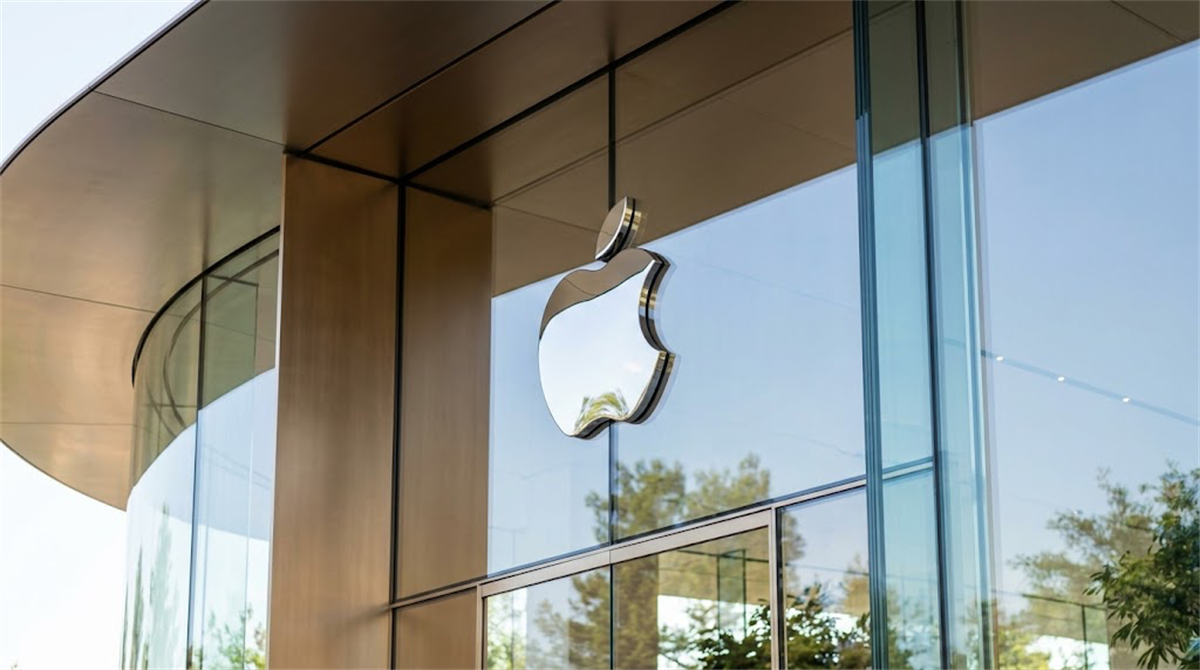
The Apple Inc. logo mounted on the exterior glass facade of an Apple retail store.

For most of 2026, the main knock on Apple Inc. (NASDAQ: AAPL) was that it had become a bystander to the AI boom, watching rivals pour fortunes into chips and data centers while it kept its own AI infrastructure spending comparatively restrained. More and more, however, that caution is now being seen as a strength.

While many tech stocks are still reeling from the market-wide sell-off on Nov. 5, Apple shares closed Nov. 10 roughly 2% below the intraday record high they set that day. For a company long written off as an AI also-ran, being suddenly seen as the steady one, while the wider AI trade starts to crack, is an unfamiliar role.

The irony is that the AI-related sell-off followed the U.S. midterm elections on Nov. 3, but it’s those very results that have some of Apple’s most optimistic bulls calling for more gains.

Is Apple the Best Stock to Own After the Midterms?

The biggest call came from Evercore ISI analyst Amit Daryanani, who reiterated his bullish view of Apple after the Democratic sweep of Congress. He called Apple “THE name to keep working when investors want to get defensive,” and his case rests on two very different ideas.

Unlike the hyperscalers and chipmakers pouring billions into data centers, Apple’s earnings engine runs on iPhone pricing, product mix and its Services arm, not on a breakneck buildout of AI infrastructure. If a Democratic Congress makes that buildout slower or costlier, Apple has far less riding on it than most of its peers.

That relative insulation is the heart of the case. Apple could still ride the AI wave through device upgrades, ecosystem lock-in and potentially paid software features; in effect, monetizing its enormous installed base without having to match the AI infrastructure spending of its largest rivals.

The Memory-Cost Twist That Could Help Apple

The other side to Daryanani’s thesis might seem counterintuitive, but it actually makes a ton of sense. It’s well known by now that surging memory prices have been a real drag on Apple throughout 2026, with the company again warning in its latest earnings report that this was likely to keep hurting its gross margins.

Daryanani’s wager is that a slower AI buildout, thanks to the so-called “Blue Wave,” could actually ease that pain. His thinking goes that if data center projects get delayed or blocked, the insatiable demand those projects place on memory chips should cool. The companies hurting so much from the related memory price inflation, Apple chief among them, could watch their costs drift back down. In other words, the same gridlock denting the AI names might quietly hand Apple a margin tailwind.

To be sure, this is a slow-burn benefit rather than an instant one. Apple has locked in some supply and may wait several quarters before cheaper chips reach its margins, and industry forecasts suggest memory prices could stay elevated through much of 2027. But it’s another reason to be more bullish, rather than bearish, on Apple after the midterms.

Valuation, China and a Margin Squeeze Still Loom

None of this makes Apple bulletproof. Management expects December-quarter gross margins of 45% to 46%, with memory costs, supply constraints and heavy purchase commitments set to keep hurting for a while before any relief shows up.

There are softer spots, too. Apple’s Services growth has been cooling, its prospects in Greater China still carry a nagging question mark despite recent sales growth, and the stock’s valuation leaves little room for error. A Democratic sweep also raises the prospect of tougher congressional scrutiny of big tech, something Apple is no stranger to.

So Is Apple Really the Place to Hide?

For now, the case for Apple as an ideal defensive play is strong in theory, but a little shakier on price. The company is well positioned to grow AI-related revenue through its devices and Services without having to bet the house on data-center construction, and a cooling build-out could hand it a welcome margin reprieve down the line.

The snag is that there may be more short-term pain before that reprieve arrives, and if the wider tech landscape continues to sell off, it will be hard for Apple to remain near highs at its current valuation.

The split across analysts on Wall Street sums it up. While November has already seen Sanford Bernstein lift its price target to $380, matching Evercore’s, there have also been downgrades from the likes of Phillip Securities and DZ Bank. As a hiding place, Apple might make far more sense than most of its peers right now, but as a bargain, it’s asking investors to pay a hefty price for that peace of mind.

Recent News